More about SAVMA
$$$ 2+2 Advice Agility AKC Canine Partners Animal Welfare Antibiotics Artwork Atlantic Vet College AVMA AVMF Baby Bacteria Best Advice Brucellosis Cartoon Cases/Abstracts Clinics Colorado competition Conservation Contest Cornell Creative Corner Current Topics Curriculum Date night Drawing Economics Education EIC ELC Elections Emerging Issues Emotional Intelligence EPDC equine Exchange Host Exotics Experiences Extern and Internships Externship Externship locator Feral cat FFA Fish Florida Foot in Mouth Disease Forensics Forum France GAC Georgia Grants Haemonchus Health and Fitness HOD Honduras humor ICDC Illinois Iowa State IVSA IVSA Symposium Johne's Jolly Ball Just for Fun Kansas State lab animal Large Animal Legislative Day Life as a Vet Student LLarge Animal Loan repayment Lobbying Louisiana Louisiana State Medicine Michigan Minnesota Mississippi Mississippi State Mouse NAP stipend NAVLE NAVMEC Nebraska News North Carolina Ohio Oklahoma One Health Challenge Orange Peel Art Oregon Parasitology Pennsylvania Pfizer Photograph Poetry Pregnancy Prize Money Public Health Public Health and Community Outreach Purdue RAVS Ross U SAVMA News scholarship Shelter med Small animal South Africa Stray animals Study Tips Summer Swine Symposium Task Force Teaching Excellence Award Tennessee Texas A&M Thailand Tracking Travel Trivia Trivia Results Tufts Tuskegee UC Davis Upcoming topics Updates USDA Vet2011 Virginia-Maryland VLE Washington DC Washington State wildlife Wisconsin Women and Men zoo med
Questions? Comments?

Entries in Iowa State (8)

Monday
Mar212011

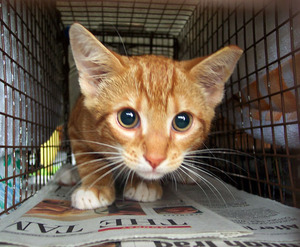
Feral Cat Alliance Megaclinic

By: Jennifer Stecher

Iowa State Univeristy, Class of 2012


Iowa State University Feral Cat Alliance (FCA) is a volunteer, veterinary student organization under the supervision of ISU College of Veterinary Medicine faculty and staff that is dedicated to serving central Iowa communities by humanely controlling the feral cat population.  Our mission is to humanely reduce the feral cat population by using a trap, neuter, and return program (TNR).  TNR programs allow feral cat colonies to be humanely trapped by their caretakers and transported to our ISU facility to be surgically sterilized, vaccinated, receive a topical dewormer, and become ear tipped.  Afterwards, the cats are returned to their caretakers to be released back into the wild (their territory).   

FCA holds monthly clinics and an annual Megaclinic at ISU College of Veterinary Medicine.  On Saturday, September 18, 2010, FCA held their annual Megaclinic.  Over one hundred ISU veterinary students, eleven ISU/local veterinarians and several ISU staff worked to surgically sterilize, vaccinate and deworm one hundred feral cats.

With the help of SAVMA ELC Grant, FCA was able to fund this endeavor to surgically sterilize feral cats and provide education to the local community and veterinary students about the behavior, medical risks, infectious disease risks, and overpopulation issues of feral cats.   Feral cat overpopulation is a huge issue in the central Iowa community and FCA’s monthly clinics and the annual Megaclinic attempt to reduce these numbers through our spaying and neutering efforts.  It was approximated that at the Megaclinic, we prevented about 90-110 pregnancies and 450-500 kittens from being born this year alone.  This was a great accomplishment for the Feral Cat Alliance and Iowa State University College of Veterinary Medicine.  
 

Monday
Mar142011

Living the 2+2 Program Reality

By: Jennafer Glaesemann

Iowa State Univeristy by-way-of University of Nebraska, Class of 2012

Consider 25 students, approximately 30 faculty and staff members, 2 classrooms and 3 teaching laboratories, and 3 student organizations... and then 120 students, approximately 500 faculty and staff members, over 565,000 square feet in the largest academic building of its respective university, and 33 student organizations.  Then consider being separated by 223 miles and approximately 3.5 hours, depending on construction, road conditions, and the foot on the accelerator.  When the new kids on the block enter the playground of one of the oldest public veterinary schools in the nation, these two groups are thrown together in a maelstrom guaranteed to produce sparks.  Those sparks have instigated an innovative educational design that is spreading like wildfire in the veterinary education field as institutions struggle to balance resource constraints with societal demands for increased numbers of veterinarians.

Click to read more ...

Wednesday
Dec152010

AVMA HQ Externship

By: Trina Schey

Iowa State University, Class of 2013

The summer of 2010, I participated in the AVMA headquarters externship at the Schaumburg, Illinois location.  I was assigned to the Education and Research division and quickly became familiar with the role of the AVMA in college accreditation within the states and abroad.  The first day at the office was filled with excitement as well as a bit of apprehension.  I was introduced to all the key players in the division starting with Dr. David Granstrom and Dr. Elizabeth Sabin, both in which were very influential in the role that I was to play as an AVMA extern.  Dr. Granstrom gave me a tour of the building introducing me to everyone at the facility, many names and faces that I would try to keep together, and then had me settle down in my office and begin the research for my project. 

Click to read more ...

Monday
Nov292010

Cold Winter Evening

By: Megan Keplinger

Class of 2011, Iowa State Univeristy

There's no denying it, the snow is coming soon (if it hasn't already).

Friday
Jul232010

A New Direction

By: Elizabeth Wormley

Iowa State University, Class of 2011

My name is Elizabeth, and I am now addicted to shelter medicine…

No joke; I couldn't have asked for a better start to clinics. My two week externship at the Nebraska Humane Society was unparalleled on many levels - knowledge gained, hands-on practice, and working with a great team. I've always been fond of population medicine - I enjoy laboratory animal medicine, and I was the president of the ISU Feral Cat Alliance program this last year. Working with a wide variety of species has always been of great importance to me, and I found that shelter medicine allows me to do just that. Many think shelter medicine = mass spays and neuters. Perhaps at some smaller shelters, this is the case. But at many shelter facilities (including NHS), there is FAR more going on, and great medicine is being practiced. Just a few of the things I experienced:

Click to read more ...